


Being a vegetarian on keto can give you the best of both worlds if you know which proteins and fats are low in carbs and have a meal plan in place.
The ketogenic, or “keto,” diet is awesome for people who are looking for ways to lose weight and improve their health.
The keto diet is a high-fat, low-carbohydrate diet that can be difficult to follow if you’re not eating meat. However, it is possible to follow a vegetarian keto diet with a little planning and effort. In this blog post, we’ll outline what the keto diet is, how vegetarians can follow it, and some tips for following a vegetarian keto diet long term.
Why Would You Want To Be A Vegetarian On Keto?
I personally have had a lot of success with the keto diet (cheesecake story). I actually learned about it from my parents years ago before it became popular. They had tried it and each lost 10 pounds (of inflammation) in about a week. I tried it, and haven’t looked back since!
My mother, on the other hand, has had many different health issues for years and years. And although the keto diet helped in some ways, her doctor asked her to switch to a vegetarian diet for a few months to help clear up some medical problems.
What to do? She loved how she felt on keto, and was afraid to go back to a grain and sugar-laden diet that some vegetarians do.
I reassured her that there is a venn diagram where vegetarian-friendly foods and keto-friendly foods combine.

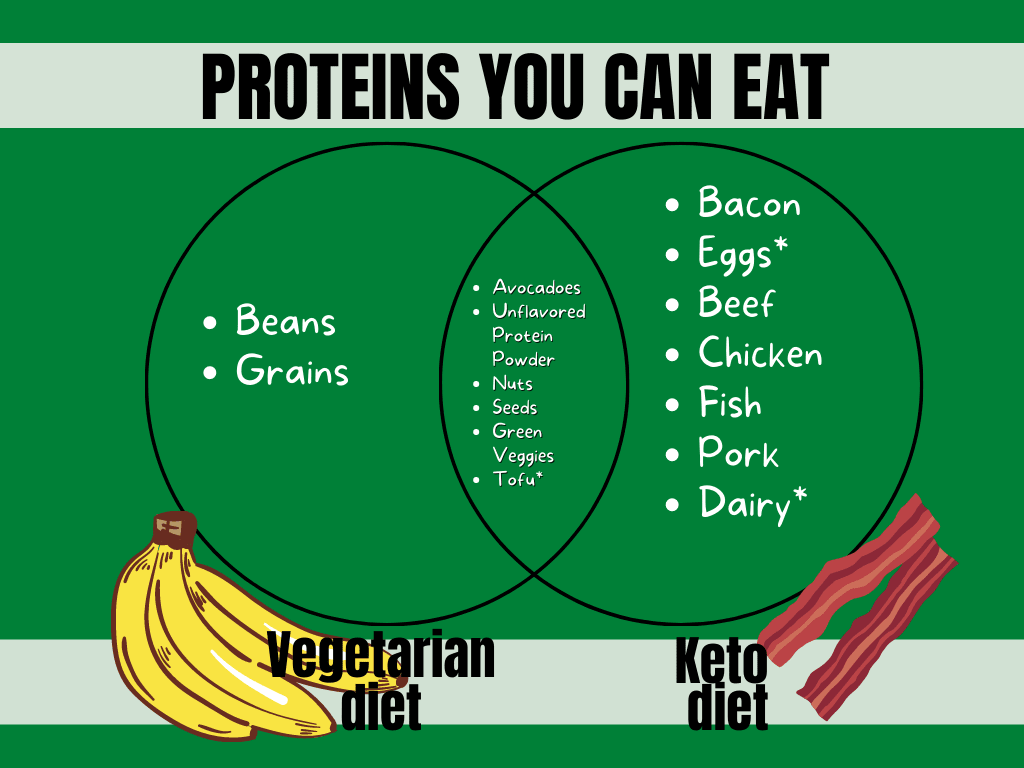
Going vegetarian on keto is a genius thing to do, because there are so many vitamins and minerals in vegetables. And making your plate full of those things, and still staying away from empty calorie fillers like grains, can only help your body.
There are many health benefits to following a vegetarian diet: Vegetarian diets are typically lower in saturated fat and cholesterol than meat-based diets, and they tend to be higher in fiber, antioxidants, vitamins C and E, potassium, and phytochemicals. Vegetarians also tend to have lower rates of heart disease, obesity, type 2 diabetes, and some types of cancer.
The keto diet is a high-fat, low-carbohydrate diet that has been shown to have many health benefits. Some of these benefits include: weight loss, improved mental clarity and focus, decreased inflammation, and better blood sugar control
One of the main benefits of following a keto and vegetarian diet together, is that you’ll get the best of both worlds when it comes to health. You’ll enjoy the weight loss and health benefits of the keto diet, as well as the many health benefits of a vegetarian diet.
What is the Keto Diet?
The ketogenic, or “keto,” diet is a high-fat, low-carbohydrate diet that has been shown to lead to weight loss and improved health markers in studies.
When following a keto diet, your goal is to enter a state of “ketosis,” where your body is using fat for energy rather than carbohydrates. To do this, you need to consume high amounts of fat and very few carbs (less than 50 grams per day). This can be difficult to do if you’re not eating meat, as many high-fat foods are also high in protein (which you need to eat in moderate amounts on a keto diet). However, there are some plant-based fats that can help you reach your fat macros while following a vegetarian keto diet. These include:
- avocados and avocado oil
- olives and olive oil
- coconut oil
- nuts and seeds
- nut butters
Vegetarians also need to be aware of their protein intake on a keto diet, as too much protein can kick you out of ketosis. Aim to eat around 1 gram of protein per kilogram of body weight (or 0.36 grams per pound), and focus on getting most of your protein from plant-based sources such as tofu, tempeh, seeds and nuts.
Some Good Vegetarian Keto Diet Meal Ideas
Now that we’ve gone over the basics of following a vegetarian keto diet, let’s talk about some good meal ideas. Remember that on a keto diet you should be focusing on high-fat, low-carb foods. First, check out the must-haves items to buy online that will help you with all your beginner keto needs. Here are some examples of vegetarian-friendly keto meals:
Breakfast: Chia Seed Pudding made with coconut milk or almond milk, with berries on top.n(check out some good chia breakfast ideas here)
Lunch: A salad made with mixed greens, avocado, olive oil and vinegar dressing, sunflower seeds and sliced almonds (like this recipe)
Dinner: Roasted cauliflower with olive oil and spices; served with grilled tofu and sautéed kale (cauliflower here)
Snacks: celery sticks with peanut butter or almond butter; full-fat yogurt with berries; coconut chips; olives; avocado slices. I absolutely love every kind of vegetable in the airfryer with a little bit of olive oil and seasonings (check out what can be airfried here)
Dessert: Chia pudding can be used as a dessert. The other one that I like, is candied pecans. . . it also gives you the benefit of eating extra protein.
Other keto vegetarian dinner ideas are:
- Vegetable stir fry made with tofu, vegetables and coconut oil (recipe)
- Veggie burgers served on a lettuce wrap with avocado slices (recipe)
- Grilled portobello mushrooms topped with pesto and Parmesan cheese (recipe)
- Zucchini noodles with vegetable marinara sauce (recipe) or use these noodles
How to Follow a Vegetarian Keto Diet Long Term
Following a vegetarian keto diet long-term requires planning and commitment. You’ll need to make sure you’re getting enough fat each day by including healthy fats at every meal. try some simple fat bombs (like this chocolate one) It’s also important to mix up your sources of fat so that you’re not eating the same thing every day.
Finally, make sure you’re getting enough variety in your meals by including different vegetables, proteins (tofu, tempeh, nuts, and seeds), and even some fruits (berries) each day. By following these tips, you can stick to a vegetarian keto diet long-term without feeling deprived or bored.

What Protein To Use When Vegetarian On Keto
The keto diet has been gaining in popularity in recent years, and for good reason – it’s an effective way to lose weight and keep it off. However, the diet can be challenging for vegetarians, as it requires a major shift in eating habits. To do the keto diet as a vegetarian, you need to find other sources of protein, like high-fiber and moderate-protein veggies. Here are some of the best choices:
- Nuts and seeds: Nuts and seeds are a great source of healthy fats, which are essential for the keto diet. Just be sure to choose varieties that are lower in carbs, like almonds, walnuts, and flaxseeds.
- Tofu and tempeh: Tofu and tempeh are two popular meat substitutes that are high in protein and low in carbs. They’re perfect for Ketogenic vegetarians.
- Leafy greens: Leafy greens like spinach and kale are packed with nutrients but low in calories. They’re a great way to bulk up meals without going over your carb limit.
- Protein Powder: Many protein powders out there are full of carbs. I would recommend a pea protein if you stay away from dairy, or this protein powder if dairy isn’t a problem. Then I would use keto-friendly sweeteners and some berries to make a smoothie or shake with them.
By following these tips, you can successfully do the keto diet as a vegetarian. With a bit of planning and creativity, you can enjoy all the benefits of this healthy way of eating.
Are Meatless Substitutions Keto?
If you are trying to reduce your intake of animal products for health or ethical reasons, you may be wondering what the best meat substitutes are.
While there are many delicious options available, it is important to consider the nutrient content as well.
For example, some meatless products are made with high-carb ingredients like breadcrumbs or flour. If you are watching your carb intake, you may want to choose a different option.
Other meatless products are made with soy or other plant-based protein sources.
Here is an excellent article that has suggestions and also a bunch of other vegetarian/keto recipes (Here)
These can be a good option if you are looking for something that is high in protein and low in carbs. Ultimately, the best meat substitute is the one that meets your nutritional needs while also being delicious and satisfying.
What Are The Fatty Acid Vegetarian Options?
There are a variety of ways to get healthy fats into your diet, even if you’re a vegetarian. One way is to look for healthy fats in your oils and vinegars.
- Oils, such as olive oil and avocado oil, contain healthy fats that can help improve your overall health.
- Vinegars, such as balsamic vinegar and apple cider vinegar, also contain small amounts of healthy fats and are excellent for your gut.
- Nuts and seeds are great sources of healthy fats, protein, and other nutrients.
- Avocados are a fruit that is high in healthy fats, as well as fiber and other nutrients.
- By incorporating these foods into your diet, you can make sure you’re getting the healthy fats you need.
Bullet-Proof Coffee And Bullet-Proof Hot Chocolate.
Keto coffee is a high-fat, low-carbohydrate coffee drink that has become popular among people following the ketogenic diet.
This doesn’t work for some people, but changing it to sugar-free hot cocoa works the same. (using plain cocoa, sweetener, and a bit of vanilla). While the exact ingredients vary, most keto coffee recipes call for adding coconut oil or whipped coconut cream to black coffee.
This addition increases the fat content of the coffee and helps to keep people feeling full and satisfied throughout the day. Keto coffee is also a good option for vegetarians, as it provides a source of healthy fats that are often lacking in plant-based diets. Whether you are following the keto diet or just looking for a filling breakfast option, keto coffee is worth a try.
To Sum Things up:
- To do the keto diet as a vegetarian, you need to find other sources of protein, like high-fiber and moderate-protein veggies.
- You can also try meatless substitute products made from vegetables, but always look at the carb amounts.
- To get your fat in other ways, look for healthy fats that are vegetarian-friendly in your oils or vinegar.
- Keto coffee is a good breakfast option that is vegetarian-friendly and will fill you up during or in between meals.
What about just going dairy-free on keto? We’ve tried that too. Check it out
